
Fixing a Garbage Disposal Leak: The Dirty Truth
Garbage disposal leaks are actually more common than you might think. Usually, the customer calls a plumber for this pesky problem because they don't have the experience to fix it themselves.
When customers think of a garbage disposal, they think of a complex machine with spinning blades and other moving parts. Problems can occur just about anywhere within the system, and while some problems really do require a licensed plumber to fix, there are some problems that you can easily fix yourself, saving you hundreds of dollars.
Here are five of the top causes of garbage disposal leaks.
Issue #1: The Dishwasher Connection
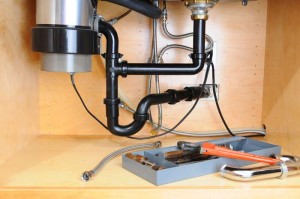 If you have a dishwasher, your garbage disposal might also be connected to the drain pipe on your dishwasher. This connection is designed to help get rid of excess food that has been left on plates and is another common place where leaks can occur, often because of either a cracked hose or an improperly installed clamp.
You should inspect your hose from time to time, paying special attention to any hairline cracks that may be forming.
If you see any cracks in the hose, it will need to be replaced.
Issue #2: Damaged or Improperly Installed Sink Flange
A sink flange that wasn't installed correctly is a common problem. The sink flange is located where the garbage disposal connects to your drain. The primary function of the sink flange is to create a water-tight seal between the garbage disposal and your sink. This can fail for a few different reasons:
Loose/stripped bolts - The bolts that hold the sink flange to the sink itself might simply need to be tightened. Usually, there will be three bolts holding the sink flange in place. If the bolts are not securely tightened, the seal will be compromised, allowing water in the sink to leak through.
The solution is as simple as using a small wrench to re-tighten the bolts until they will no longer turn. If the assembly still feels slightly loose or the bolts do not seem to tighten down all the way, you might have stripped threads on your bolt.
You will need to replace the bolt with a new one. You can usually pick up a pack of three to six bolts for between two and five dollars at your local home improvement shop. Make sure you pay attention to the size of the bolt. A plumber would suggest bringing one of the bolts with you so you have a guide as to what size bolt you should buy.
 Worn putty - The gasket that creates the seal between your sink and the garbage disposal is actually made of "plumber's putty", a substance that is incredibly resistant to water.
This does not mean the putty is waterproof - the putty will fail over time because of the constant bombardment of water, and it will need to be replaced.
This is done by loosening the retaining bolts located just underneath the sink flange where it meets with the pipe going to the garbage disposal itself. Don't loosen the bolts all the way. Instead, loosen the bolts just enough to create a small gap between the sink flange and the pipe, then squeeze a generous amount of plumber's putty around the gap.
Remember, your goal is to create a watertight seal. When you're finished, you can re-tighten the retaining bolts, and if this has been done correctly, the leak should be gone.
Simple corrosion - Over time, the sink flange will corrode. When the sink flange has corroded, it will not be able to prevent leakage as effectively as it should. When this happens, the sink flange itself will need to be replaced.
To replace the flange, completely loosen the three bolts that are holding it to your sink. The flange should easily come off. If the bolts have also corroded, you may need to contact a professional to have it uninstalled for you, as you do not want to break or otherwise damage any of the bolts.
Issue #3: The Dreaded Shell Crack
Over time, cracks can also form in the interior shell of your garbage disposal due to wear and tear. When these types of cracks form, water may squirt out of the openings. At this point, it may be time to look at having your disposal replaced.
At any rate, you should at least have the garbage disposal removed so the problem doesn't get any worse because if a cracked garbage disposal is left alone for too long, it can cause more expensive problems you may not be able to repair yourself, such as wood rot or black mold.
Issue #4: The Discharge Pipe
 You may notice a small pipe coming out from underneath your garbage disposal that connects to the drain of your sink. That is the discharge pipe, and it is connected via a flange and seal.
Over time, the seal can wear away, or the flange might crack, causing a leak. To diagnose this problem, make sure the flange is securely tightened. Barring that, you may need to replace the seal. It is located on the bottom of the unit between the discharge pipe and the retaining nut.
Issue #5: The unit may have been knocked loose.
Many garbage disposal units are mounted under the sink, and people keep items under the cabinet such as cleaning fluids, scouring pads, etc. With that said, people will sometimes accidentally hit the garbage disposal in such a way that the entire unit is jarred loose, causing a leak.
If you notice water trickling under the cabinet after hitting the unit, you will need to ensure that all bolts and pipes are secured. If that fails to stop the leak, you will need to replace either the putty near the sink flange or the sealing ring.
Contact Lodder Brothers Limited for more Do-It-Yourself plumbing tips!
Get in contact with Lodder Brothers Limited for more garbage disposal tips like these at (226) 780-4479, in Cambridge, ON.
